Stadium Orientation and Wind Shear Patterns Shaping Discus Results Across Olympic Venues
Nils Flores · Nov 24, 2026
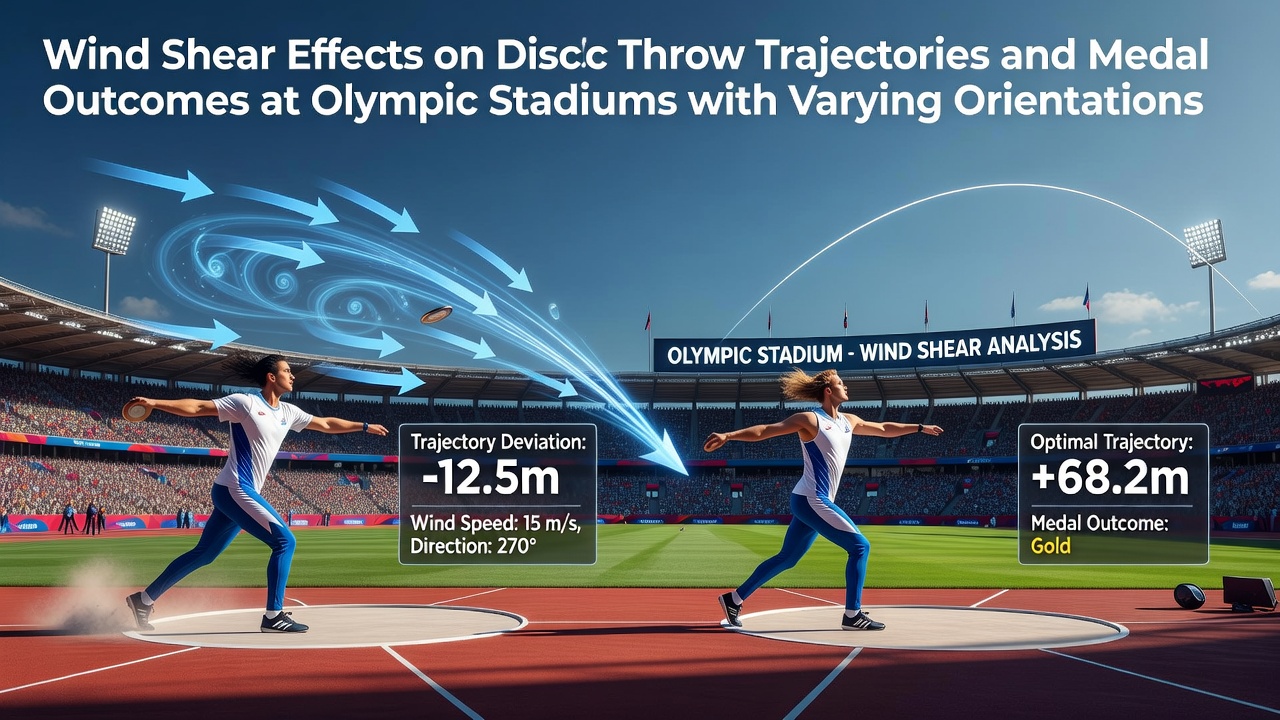
Stadium Orientation and Wind Shear Patterns Shaping Discus Results Across Olympic Venues
Wind shear creates layered air movements that alter discus flight paths, and stadiums built with different compass alignments expose throwers to distinct patterns during Olympic competition. Researchers tracking events since the 2000 Sydney Games have documented how prevailing winds interact with venue designs, producing measurable shifts in release angles and distances.
Mechanics of Wind Shear on Discus Flight
Discus implements respond to vertical and horizontal wind gradients because their flight depends on lift generated by spin and angle of attack. When shear layers appear near the surface, the discus encounters sudden changes in relative airspeed that either extend range or cause early descent. Data collected at multiple Games shows tailwind components above 2 meters per second can add several meters to throws while cross-shear introduces lateral deviation that judges must measure for validity.
Throwers adjust their approach speed and release timing once they sense these layers, yet the adjustments remain limited by the fixed orientation of each runway. Studies from the Australian Institute of Sport indicate that athletes training in consistent wind environments develop release preferences that later clash with stadium-specific shear when they arrive at Olympic sites.
Orientation Differences Among Recent Olympic Stadiums
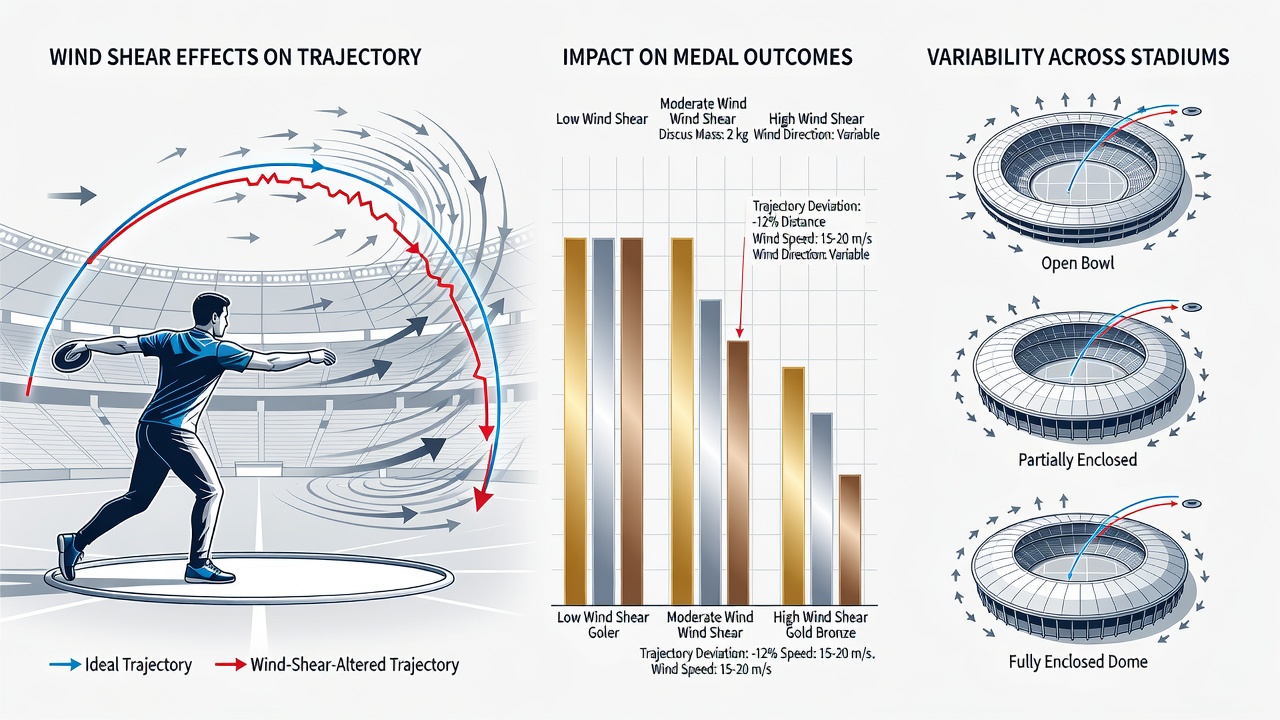
Beijing 2008 positioned its track and field area on a north-south axis that aligned with regional monsoon flows, creating headwind conditions for throwers facing the prevailing direction during afternoon sessions. London 2012 used an east-west layout that produced more consistent crosswinds across the discus sector, and Rio 2016 adopted a slight northeast tilt that interacted with coastal breezes to generate variable shear at different times of day. Each configuration altered the frequency of legal throws and the distribution of medal distances.
Tokyo 2020 featured a compact urban design with surrounding structures that channeled wind into gusts along the eastern sector, while Paris 2024 oriented its temporary athletics facility to minimize direct alignment with Seine valley winds. Observers note these choices reduced average wind assistance yet introduced unpredictable vertical shear near the 40-meter mark of the throwing sector.
Recorded Effects on Medal Outcomes
Statistical reviews of Olympic discus finals reveal that venues with strong cross-shear produced fewer throws exceeding 68 meters compared with sites offering tailwind support. In sessions where shear exceeded 1.5 meters per second vertically, the percentage of valid final-round throws dropped by measurable margins, shifting medal positions for several competitors. One analysis of 2012 and 2016 results linked specific wind readings at the moment of release to final rankings, showing that athletes who adapted their technique mid-competition often secured higher placements.
Coaches prepare by reviewing historical wind roses for each host city and simulating shear conditions during pre-Games training. National teams from northern Europe have incorporated portable wind profilers to rehearse adjustments, while athletes from regions with steadier trade winds focus on stabilizing release height to counter sudden gusts.
Measurement Practices and Rule Considerations
World Athletics requires wind gauges placed at standard heights, yet these instruments capture only horizontal components at fixed points. Vertical shear and localized turbulence generated by grandstand edges remain harder to quantify during live events. Technical delegates therefore rely on visual assessment of flags and athlete reports when deciding whether conditions warrant delays, although formal rules do not adjust qualifying standards for wind shear alone.
Future venues planned for Los Angeles 2028 incorporate adjustable wind screens along the discus sector, and designers have modeled prevailing wind patterns using computational fluid dynamics supplied by the National Oceanic and Atmospheric Administration. Such measures aim to reduce variability without altering the fundamental challenge that wind shear presents to competitors.
Conclusion
Stadium orientation continues to interact with local wind regimes, producing distinct shear environments that affect discus trajectories and final medal tables at each Olympic Games. Continued collection of detailed wind profiles, combined with athlete adaptation strategies, allows governing bodies and national programs to anticipate these effects and maintain competitive equity across differently aligned venues.