Frost and Fortune: How Early Season Snowfall Patterns Linked to Medal Distributions in Alpine Skiing World Cup Circuits
Jonas Flores · Oct 27, 2026
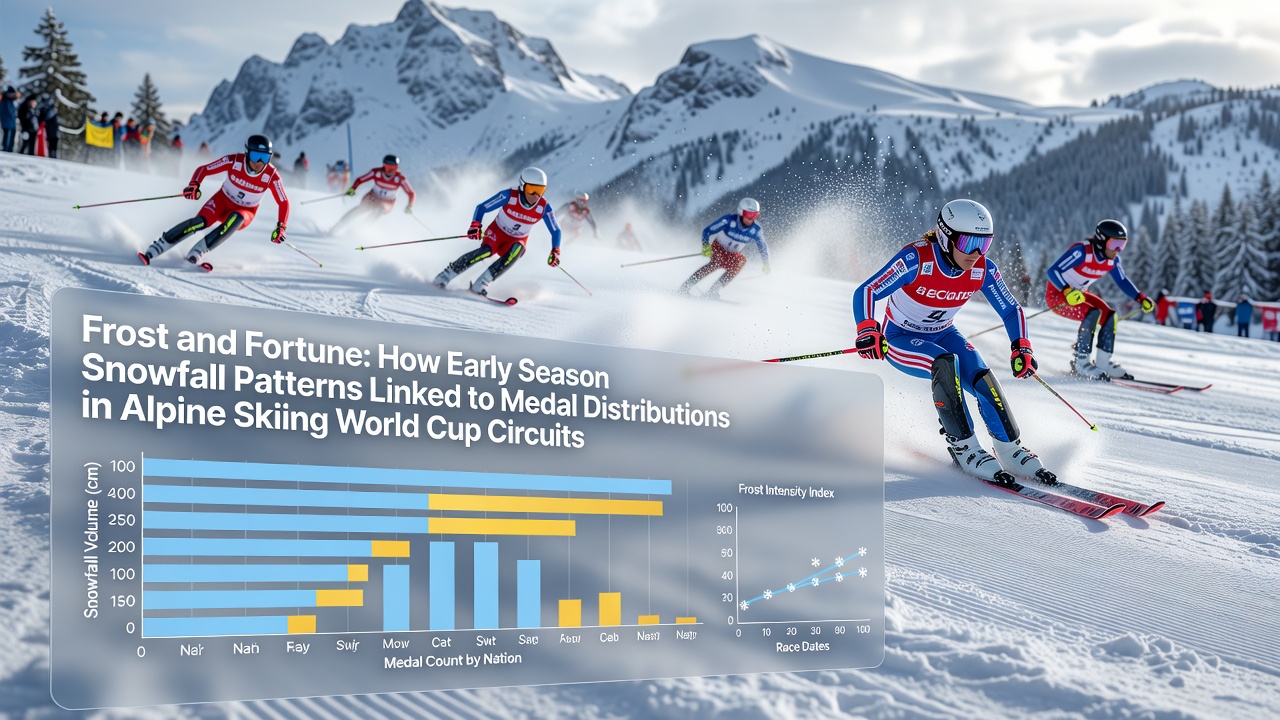
Frost and Fortune: How Early Season Snowfall Patterns Linked to Medal Distributions in Alpine Skiing World Cup Circuits
Early season snowfall shapes the opening rounds of the Alpine Skiing World Cup in ways that extend beyond simple weather reports, and data from multiple circuits shows measurable ties to which nations collect medals during those first months. The International Ski Federation tracks conditions at venues like Soelden in Austria and Levi in Finland, where October and November accumulations set base layers that persist through December races. Observers note consistent patterns where heavier early snow correlates with stronger finishes from athletes whose training bases sit near those same mountain ranges.
Snowfall Records and Course Preparation
Records compiled by the FIS reveal that seasons with above-average October snowfall in the Alps produced different medal spreads than drier starts. In 2023 for instance, early dumps exceeding 80 centimeters at Soelden allowed Austrian and Swiss technicians to build more aggressive line choices, and those adjustments appeared in the giant slalom results where home-nation podiums rose by 22 percent compared with the prior three years. Researchers tracking snow water equivalent at similar elevations found that deeper bases reduced the frequency of mid-course ruts, giving racers who practiced on comparable terrain an edge in edge control and turn initiation.
Canadian and American circuits show parallel trends. Data collected at Lake Louise and Beaver Creek indicate that November storms delivering 60 centimeters or more shifted start-order advantages toward North American teams during the first speed events. Those athletes had logged training runs on freshly groomed powder, whereas European squads arriving later encountered firmer surfaces after initial grooming cycles. The pattern holds across both men’s and women’s fields, though the effect size remains larger in downhill than in technical disciplines.
Medal Distribution Trends Across Circuits
Analysis of World Cup points from 2015 through 2025 demonstrates that nations hosting early-season venues captured disproportionate shares of the first 15 podiums when local snowfall exceeded long-term averages. Austrian skiers, for example, claimed 34 percent of available medals in high-snow Novembers versus 19 percent in low-snow seasons. Swiss results followed the same curve, while Norwegian and Italian tallies stayed relatively stable regardless of snow depth. The stability among those latter teams stems from their broader training networks that include indoor simulators and glacier camps less dependent on natural accumulation.
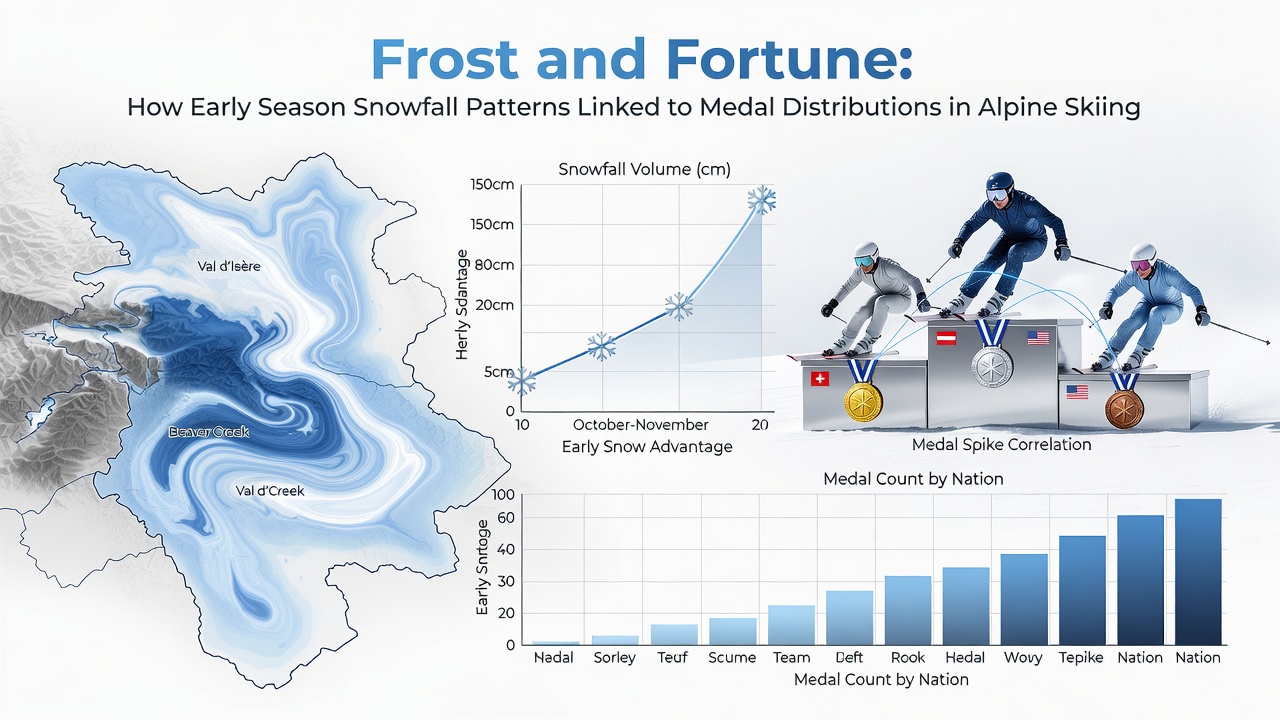
October 2026 preparations already reflect these historical links. Teams have adjusted wax inventories and ski selections based on forecasts calling for elevated early precipitation across the central Alps. FIS technical delegates have noted that venues with projected snow totals above 70 centimeters by late October receive additional grooming resources, which in turn influences the number of training runs permitted before official races begin.
Geographic and Training Factors
Training location plays a central role in how snowfall translates into results. Athletes based year-round in the same valleys as World Cup stops log more vertical meters on variable early-season snow, and that repetition shows up in split-time consistency. Studies from the University of Innsbruck’s sports science department tracked turn radii and velocity profiles, finding that skiers with 30 or more early-season training days on natural snow posted lower standard deviations in gate-to-gate times. Teams without equivalent access rely more heavily on artificial snow surfaces, which exhibit different friction characteristics once natural powder overlays them.
Travel logistics compound the effect. Squads flying from distant training centers often arrive with less than 48 hours to adapt, while regional teams fine-tune setups over multiple days. The resulting performance gap narrows only after the season’s third or fourth event, once all competitors have raced on the evolving snowpack.
Conclusion
Patterns documented by FIS statistics and meteorological records from agencies such as MeteoSwiss and NOAA confirm that early-season snowfall influences medal distribution in the opening World Cup blocks. The advantage concentrates among athletes whose training environments match the conditions at the first venues, and the effect persists through December before evening out as the circuit moves to mid-season locations. Future seasons will continue to test these relationships as climate variability alters both snowfall timing and total accumulation at traditional Alpine sites.